Booking home deep cleaning services is a good first step. A little preparation on your side helps the team work faster and reach more surfaces. In Pune, many families schedule a deep clean before Diwali, after renovation or when moving into a new flat in Hinjewadi, Kothrud, Baner or Wakad, and the same preparation advice applies to all of them.
What Deep Cleaning Covers
Regular cleaning keeps a home tidy. Deep cleaning services go further. They reach areas that routine sweeping and mopping miss, such as:
Kitchen cabinets, chimney, exhaust fan and tile grout
Bathroom fittings, limescale-prone taps and tiles
Behind and under furniture and appliances
Ceiling fans, light fixtures, window tracks and grills
Balcony floors, sofas and mattresses (where included)
Most homes benefit from this every three to six months, depending on cooking habits, pets and the number of people in the house.
Step 1: Confirm the scope in advance
Before the appointment, review what your package includes. House deep cleaning services often vary in what they cover, such as inside of cabinets, fridge, chimney, balcony or sofa. Check whether your flat is furnished or vacant, because the approach differs. Telling the provider about the number of bedrooms and bathrooms, and any problem areas such as stubborn stains or hard-water marks, helps them send the right team and tools.
Step 2: Declutter surfaces
Cleaners can’t clean what they can’t reach. Clear countertops, shelves, tables, windowsills and bathroom ledges of small items. Put away loose papers, toys, toiletries and decor. It also protects your belongings from accidental damage or being misplaced.
Step 3: Secure valuables and fragile items
Keep jewellery, cash, important documents, laptops and sentimental items in a locked cupboard or with you. Wrap fragile showpieces or move them to a safe room. This is a basic precaution, not a comment on the team’s honesty.
Step 4: Empty the kitchen where needed
If the package includes cabinet interiors, remove food items, utensils and appliances from shelves. Empty the refrigerator if fridge cleaning is included. Grease and spills often hide behind jars and containers, and clear shelves let the team use steam degreasing properly, because power steam works best on exposed, greasy surfaces.
Also store perishables in a cooler or a neighbour’s fridge if the job will take several hours.
Step 5: Create access to tight spots
Pull light furniture away from walls where possible, and clear the paths to balconies, utility areas and the bathroom. Make sure the team can reach the wiring-free parts of ceiling fans and the top of wardrobes. If you have a loft or storage area that needs cleaning, clear it ahead of time.
Step 6: Plan for kids, elders and pets
Even with odourless, non-corrosive, family-safe products, it’s sensible to keep young children and pets away from the working area. Keep an elderly family member in a quiet, clean room. Tell the team about any allergies, sensitive skin or breathing conditions beforehand so they can adjust products and methods.
Step 7: Sort out utilities and basics
Make sure the team has access to:
Running water and electricity (for steam machines and vacuums)
A working water tap in each bathroom and kitchen
Parking or society entry permissions for the team and equipment
In Pune housing societies, inform security in advance so the team isn’t delayed at the gate. Some societies restrict timings for service visits, so check the rules.
Step 8: Be clear about scheduling
Plan for the whole job, which can take several hours for a large apartment. Choose a day when you can be home or have a trusted person present. Good providers offer flexible slots and free cancellation or rescheduling, so use that flexibility if plans change instead of leaving the team to arrive at an unprepared home.
Step 9: Do a walkthrough at the end
When the work is done, walk through every room with the team lead. Check kitchen surfaces, bathroom fittings, floors, mirrors and any area you flagged earlier. Raise any concerns on the spot so they can be fixed before the team leaves. Trained, well-rated professionals welcome this because it ensures the result meets expectations.
In Conclusion, strong results from professional cleaning come from teamwork. When you declutter, secure valuables, clear access, and share your concerns, the team can focus on actual cleaning instead of moving things around. With a little preparation, deep cleaning services give you a fresher, healthier and more comfortable home that lasts well beyond the appointment.
The pool at Burj Al Arab’s Talise Fitness terrace, open to day guests who book a cabana, runs about 1,200 AED per person on a weekend in February, which is peak Gulf season, and roughly 750 AED on a Tuesday in late September, when the same water sits at 31 degrees and the outdoor terrace empties by 4pm because of the humidity. Nobody selling you a luxury pool holiday leads with that second number. We priced it on 12 March 2026 and again on 2 October, and the gap was consistent across every property we checked.
Eighteen months out: the ones with genuine scarcity
Some pools are not really hotel amenities, they are regulated attractions with a fixed daily cap. The infinity pool at Marina Bay Sands sells a limited number of day passes at around SGD 110 on a weekday and SGD 150 at weekends, and the passes for Chinese New Year week in February are gone by November. If that pool is the reason for the trip, the calendar decides the booking, not the fare. We checked availability on 5 January 2026 for the following February and found four slots left across nine days.
Resort pools in the Maldives behave the same way, but the scarcity is seasonal rather than ticketed. Between late December and the first week of January, a water villa at a resort with a decent house reef runs $2,400 a night on a half-board basis for two, and the same villa in the first half of June, before the southwest monsoon settles in, drops to around $900. Two people splitting that villa pay the same $900 each as a solo traveller paying $900 alone, which is the arithmetic that makes the shoulder months work.
Is the pool heated, and in which months
Is it adults-only, and are there hours when it is not
Does the day rate include a lounger, or is that a separate charge
What is the cancellation window on the rate you are looking at
Has the pool got a scheduled maintenance closure in your travel window
Six to nine months out: pricing the shoulder properly
For European city hotels with rooftop pools, the booking window that actually pays is shorter than people assume. The pool at a five-star in central Lisbon, the sort of place with a small heated roof terrace and a bar that closes at eight, was quoted at EUR 620 a night for the second weekend of August 2026 when we looked in February, and EUR 340 for the same room on the last weekend of September. Same property, same pool, six weeks apart on the calendar. Long-haul readers flying in for it will find that vegas flights style pricing on the airfare moves on a separate rhythm to the hotel, and the two rarely bottom out in the same month, so price the room first if the pool is the point of the trip.
School holidays break the pattern. Any pool attached to a resort within a two-hour drive of a major European city is full and expensive during the last week of July and the whole of August, whatever the airfare does, because the demand is local and it is not price-sensitive.
Inside thirty days: the deals and the traps
Late inventory on luxury pools is real but narrow. City hotels in the Gulf and in Southeast Asia release unbooked suites in the final fortnight, and we have seen pool villas in Phuket go from THB 28,000 to THB 16,000 inside three weeks for a stay in the second half of May. What you cannot do at this range is assume the pool is open: several Mediterranean properties drain and resurface between November and February, and a few close the terrace entirely in the hottest fortnight of August.
The competing option worth naming is the day pass. If you want the photograph and not the room, a resort day pass at a good Phuket or Dubai property costs between $60 and $150 per person including a food credit, and it beats a night’s rate outright for anyone staying two nights or fewer.
What actually settles it is whether the pool is the destination or the amenity. If it is the destination, you buy the room in the month the pool is at its best and you pay whatever that month costs. If it is the amenity, you buy the cheapest month the water is still open.
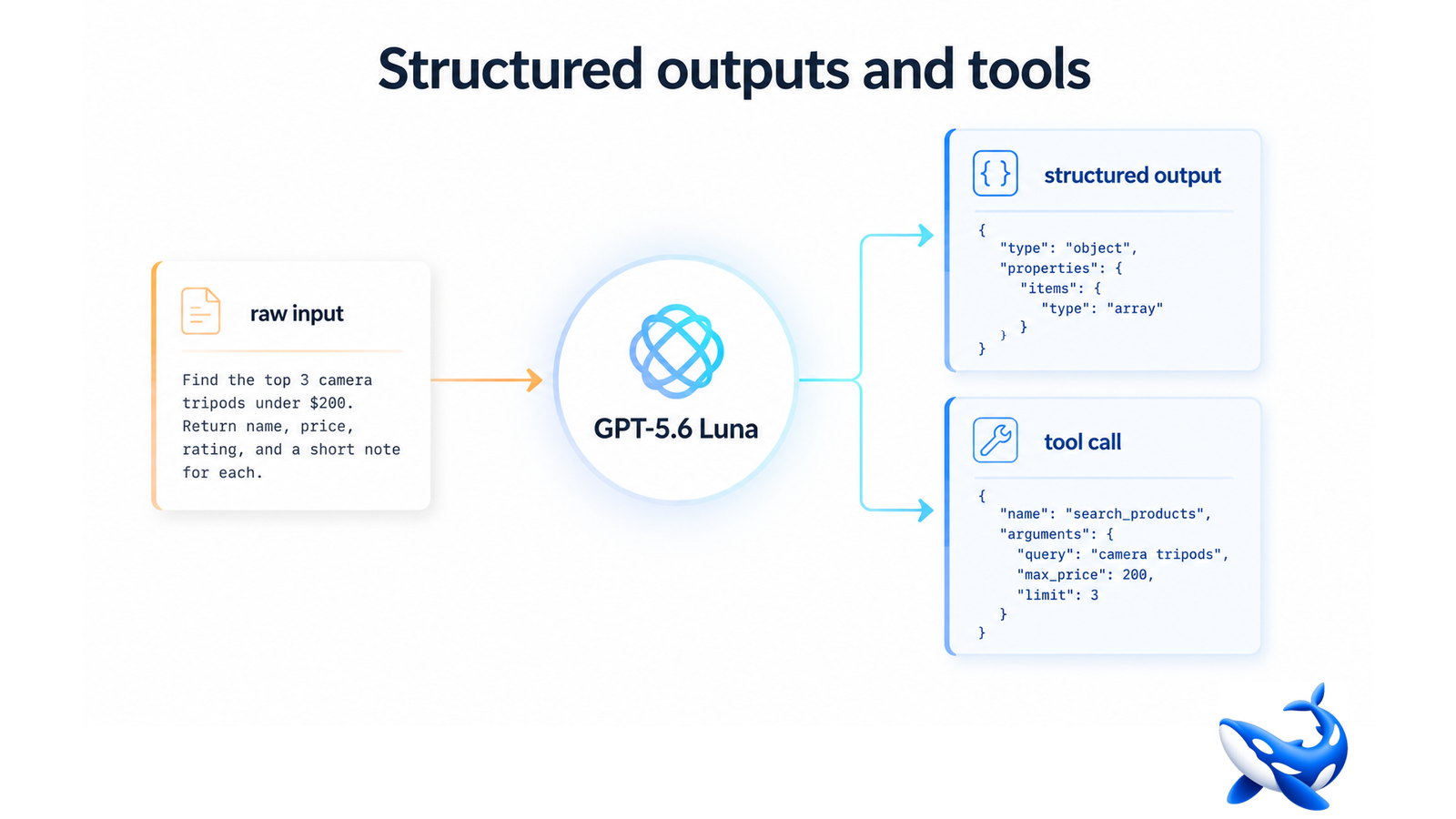
The GPT-5.6 Luna API model supports native tool calling and structured outputs, which are the two features that make a model dependable for pipelines. Combined with its price and reliability, they make Luna a strong choice for the systems that turn raw input into structured data. The GPT-5.6 family pricing breakdown covers the same model in the family context.
The difference between a demo and a pipeline is structure. A demo shows the model can answer; a pipeline needs the model to return data in a shape the code can consume, every time, without parsing prose or crossing fingers. Structured outputs and tool calling are the two mechanisms that provide that dependability.
Structured outputs: the answer comes back in a shape
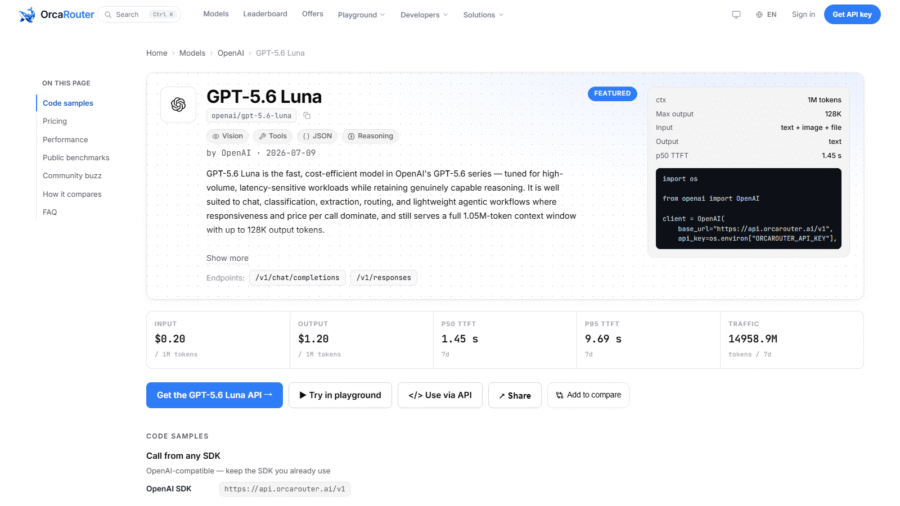
Structured outputs let you specify the schema of the response, and the model returns valid data in that shape. For classification, that is a category and a confidence; for extraction, that is the fields with their values; for any downstream logic, it is data the code can consume directly. The value is that the pipeline does not have to parse prose, does not have to hope the model followed the format, and does not have to handle schema drift. The model page lists response format and structured outputs among the supported parameters, which means the dependability is native rather than bolted on.
Tool calling: the model can act
Tool calling lets the model invoke a function with the right arguments, which is what turns a model from a text generator into a component that can act. For agents, it is how a step calls an API, queries a database, or takes an action. For automation, it is how a request triggers a workflow. Luna supports native tool calling, and its 80.9 on terminal-bench 2.1 suggests the tool use is genuinely functional for lightweight agentic work. For the tasks Luna is built for — routing, lightweight agents, automation — tool calling is the mechanism that makes the model useful rather than merely responsive.
Reliability as the dependability multiplier
Structured outputs and tool calling are only dependable if the call succeeds, and Luna’s 0.05 percent error rate is what makes them dependable in production. A pipeline that extracts from a million items can rely on the vast majority of calls returning valid structured data on the first try, with a simple retry absorbing the rare failure. The combination — native structure plus a very low error rate — is what separates a dependable pipeline model from a capable one that needs babysitting.
Designing the integration
The integration pattern is standard: define the schema or tool set, send the input, get structured data or a tool call back, and validate downstream. The failure mode of structured output is not format — it is the model filling a field wrong when the input is ambiguous, so keep validation in the pipeline and let failures feed the prompt. For tool calling, verify the arguments match what your functions expect before executing them, and handle the “model wanted to call a function with odd arguments” case explicitly. These are the small disciplines that turn a capable model into a dependable pipeline component.
The cost of structure
Structured outputs and tool calls do not change the price — the model bills at $0.20 in and $1.20 out regardless. The structure is a capability, not a surcharge, which means the dependability comes at the same low price that makes high-volume pipelines affordable. That combination — native structure, low price, low error rate — is the reason Luna is the right model for the pipes that run on every item, forever.
Testing structured output before committing
Structured outputs are dependable in the shape, but the shape is not the whole story — the values matter, and the values are where testing is needed. Before committing a pipeline, test the schema on a representative sample of real inputs: the common cases, the edge cases, the inputs with missing or ambiguous fields. The goal is to find where the model fills a field wrong or returns an unexpected value, and to fix the prompt or the schema before the pipeline runs on everything. A schema that works on clean examples but breaks on the messy reality of your data is the classic failure. The testing is cheap — a few hundred requests at Luna’s price is almost nothing — and it is the difference between a dependable pipeline and one that looks dependable until the first ambiguous input. The model returns valid data; the validation ensures it returns correct data.
The takeaway
GPT-5.6 Luna’s native structured outputs and tool calling, at a 0.05 percent error rate and a $0.20/$1.20 price, make it a dependable pipeline model: classification and extraction return valid data in the shape you specify, and lightweight agents can act through tool calls. Validate downstream and verify tool arguments, and the structure is dependable at a price that makes running it at volume a rounding error.
Sourcing note: Feature support, pricing, error rate, and terminal-bench score for GPT-5.6 Luna are from the OrcaRouter model page (checked August 2026); benchmark is sourced from artificialanalysis.ai.
Has your desert cooler abruptly stopped cooling? If yes, before you call a technician for a repair, you need to evaluate its cooling pads, ventilation, pump, water tank, etc.
One of these can be the reason the air feels warm. Even large Symphony models such as the Airforce 60 and Winter 100 XL need wet cooling pads and fresh air moving through the room.
So, before you pay a technician for a service visit, devote a couple of minutes to these checks showcased:
Why Is My Desert Cooler Not Cooling Properly?
You switch on the cooler. The fan starts. Air comes out. Yet five minutes later, the room still feels hot. Annoying, yes. But don’t assume the motor has gone bad.
A desert air cooler has a fairly simple job. It pulls warm air through wet pads and sends cooler air into the room. When water, airflow, or ventilation is disturbed, the cooling drops. Start with the simple stuff.
1. Is There Enough Water?
Look inside the tank or check the water-level indicator. This should be your first check because an air cooler cannot cool properly with dry pads.
If the tank is nearly empty, the fan may continue blowing as usual. The air just won’t feel much cooler.
Add clean water till it reaches the level suggested for your cooler. Never keep pouring water in after the tank is filled. Remember, more water does not always mean more cooling from the equipment.
In case you make effective use of the cooler for several hours daily, get into the habit of evaluating the tank on a regular basis. In case you experience a hot day, water can run out swiftly compared to what you expect.
2. Is the Water Pump On?
This happened in my own home once: the fan was running perfectly, but someone had switched off the pump. The cooler wasn’t broken. It was simply blowing normal air.
Certain models enable you to run the fan without switching on the cooling feature. Take a hard look at the switches or the control panel and ensure that the pump is kept on during usage. Once that is done, wait for some time.
The water needs time to reach the pads and wet them properly. Don’t judge the cooling the moment you press the button. If cooler air starts coming out after a short while, you have found the problem.
3. Are the Cooling Pads Dirty?
Cooling pads don’t stay clean forever. Dust gets trapped in them. The side effects of hard water are white or brown deposits, too. Gradually, the surface becomes clogged, and the water does not spread through it adequately. That hurts cooling.
Before you assess the pads, unplug the cooler. If it has a dusty look, clean them as recommended in the product manual. After how long should I replace the Cooling Pads? There is no magic date. Usage matters. Water quality matters too.
If the pads have become hard, badly damaged, or remain partly dry even after cleaning, replacing them may help. A good habit is to inspect them before the summer season starts instead of waiting for the cooler to perform badly in May or June.
4. Why Are the Pads Still Dry?
A full tank doesn’t help much if water never reaches the pads. Turn the pump on and have a look. Are all the pads getting wet? If not, the water pipe may have a blockage. The pump itself could also be having trouble.
Small dirt deposits in an accessible pipe may be easy to clean, provided your product manual allows it. Don’t start opening electrical sections to investigate further. In case the pumps make no noise, do not move water, or stop repeatedly, it means that calling a technician to fix it is inevitable.
5. Does a Desert Cooler Need an Open Window?
Yes. This one makes a big difference. An air conditioner and an air cooler should not be used in exactly the same way.
With an AC, people usually shut the room. With a desert cooler for home, some ventilation is useful because fresh air needs to enter and moist air needs somewhere to go.
You do not require a strong breeze blowing in the house. A little cross-ventilation is usually enough. If you shut everything tightly, the room can become humid. At that point, sitting in front of the cooler may feel less comfortable even though the machine is running normally.
6. Where Should I Keep My Cooler?
Definitely not squeezed in the middle of the sofa and a wall. A cooler needs to pull in air before it can push cooled air out. In case the back is blocked by boxes, furniture, or a wall nearby, airflow may not happen as you want.
Try moving it near an open window or balcony door. Then check the front. Cool air should have a clear path into the room rather than hitting a cupboard two feet away.
This matters with a large model, a portable desert cooler, or a smaller room desert cooler. Sometimes the easiest fix is simply moving the unit.
7. Can Dust Make a Cooler Less Effective?
Definitely. Look at the grill after a few weeks of summer use, and you will understand why. Dust can settle anywhere air passes. A dirty grill restricts airflow. Dirty pads do the same. Don’t spray water around the motor, wiring, switches, or plug.
This isn’t about making the cooler look neat. Clear air passages help it move more air.
8. Is My Cooler Not Big Enough for the Room?
Possibly. A cooler that feels great in a bedroom may barely make a difference in a large hall.
Think about what the cooler is dealing with. A big room takes longer to cool. Strong afternoon sun adds heat. More people in the room add warmth too. So don’t choose the best desert cooler just by looking at tank capacity. Check the recommended room coverage and airflow.
A prime example of that is the Winter 100 XL by Symphony, which has been designed for larger spaces compared to several compact models. The right unit is contingent upon where you wish to utilize it.
If you plan to buy desert cooler models for a new room, measure the space first. That small step can prevent an expensive mistake.
9. Does Humidity Affect a Desert Cooler?
Yes, and quite a bit. Desert coolers usually feel strongest in hot, dry weather. Nothing may be wrong with the machine. Enhance ventilation and see whether that works for you.
When Should I Call a Technician?
You’ve checked the water. The pads are clean. The pump is on. The cooler has enough fresh air around it. Still no luck?
Now a technician makes sense. Get professional assistance in case the pump is not working, the fan speed keeps getting lower, the motor makes an unusual sound, wires look damaged, or you observe a burning smell.
Also, take water leaking near electrical parts seriously. Don’t open the electrical section yourself just to “have a look.”
Concluding Thoughts
That depends on what’s wrong with it. Changing worn cooling pads or fixing a simple pump problem may be worth the money. But an old cooler that needs a new repair every few months can become expensive to keep.
While opting for a new cooler for home, never shop only by looking at the price. Also consider the room coverage, tank size, cooling-pad type, power usage, cleaning requirements, and airflow.
The same rule applies if you are searching for a desert cooler online. People typing desert cooler online can easily get distracted by discounts and large tank numbers.
Start with your room. A bedroom, living room, shop, and large hall won’t necessarily need the same cooler. And before you replace the existing one, go through these nine checks once.
Keep this in mind: a forgotten pump switch, dusty pads, a closed window, or low water can make a well-oiled cooler feel like it has stopped working.
Looking up who owns a publicly traded company is, in most cases, a solved problem. Securities regulators require public companies to disclose major shareholders, officers, and directors on a regular basis, and that information ends up in searchable filings anyone can access for free. Private companies play by an entirely different set of rules, and the difference catches a lot of people off guard the first time they need to check. There’s no equivalent disclosure requirement forcing a privately held business to tell the world who sits behind it, and depending on where that company is registered, finding out can range from a quick free search to something close to impossible without legal assistance.
This gap matters more than it might seem. Private companies make up the overwhelming majority of businesses worldwide, and they’re exactly the kind of counterparty that compliance teams, investors, and due diligence analysts most need to check, since they don’t come with the built-in disclosure that public markets require. A vendor, a supplier, an investment target, or a counterparty in a cross-border transaction is far more likely to be privately held than publicly listed, which means the hardest ownership questions tend to come up in exactly the situations where good information is hardest to find.
Understanding why private ownership data is so much harder to access, and what actually varies from country to country, makes the difference between a due diligence process that works and one that quietly has blind spots nobody notices until it’s too late.
Why Private Companies Don’t Play by Public Company Rules
Public company disclosure exists to protect investors trading shares on an open market, a rationale that simply doesn’t apply to a privately held business with no public shareholders to protect. Instead, whatever ownership information does get collected on private companies usually comes from a completely different source: anti-money laundering and beneficial ownership regulation, aimed at preventing companies from being used to hide illicit funds or evade sanctions. This distinction explains a lot about how the data behaves. Public company disclosures tend to be comprehensive, standardized, and genuinely public. Beneficial ownership data on private companies, where it exists at all, is often collected specifically for regulators and financial institutions, which means it frequently isn’t published anywhere the general public, or even other businesses, can freely search.
Wildly Different Rules from One Country to the Next
What makes this genuinely difficult is how much private company ownership data varies from one jurisdiction to the next, with no consistent global standard to rely on. A handful of countries, including the UK, Estonia, and Norway, publish beneficial ownership information for private companies openly and for free. Most countries fall somewhere in the middle, collecting the data but restricting access to regulators, obliged financial institutions, or applicants who can demonstrate a legitimate interest, often through a process that takes weeks and requires documentation in the local language. A meaningful number of countries, including the United States for domestically formed entities as of 2025, collect no centralized beneficial ownership information on private companies at all, leaving researchers to rely on indirect methods like corporate filings, court records, or direct requests to the company itself.
What You Can Usually Find, Even Without a Public UBO Register
Even in countries without open beneficial ownership data, some information is often still accessible. Directors and legal representatives are published far more consistently worldwide than beneficial owners, since most registries treat this as a basic condition of doing business. Some jurisdictions also publish shareholder information separately from beneficial ownership, which can offer partial insight even when true beneficial owners stay hidden behind nominee arrangements or corporate layers. Court filings, tax authority records, and industry-specific licensing databases can sometimes fill in gaps a general company registry leaves open. None of these substitutes are as clean as a proper beneficial ownership register, but combined, they often paint a more complete picture than assuming a closed UBO register means the trail is dead.
Building a Realistic Process Around These Limits
Teams that handle private company due diligence well tend to set expectations accordingly from the start. They document what was and wasn’t accessible in a given jurisdiction rather than treating a closed registry as a dead end that doesn’t need explaining. They separate directors, shareholders, and beneficial owners clearly in their own records, since blending the three creates false confidence about what’s actually been verified. And rather than rebuilding institutional knowledge of dozens of legal systems from scratch, many teams rely on a data provider that has already mapped which registries are open, which are restricted, and what realistic alternatives exist where the primary source is closed.
Final Thoughts
Private companies make up most of the business world, and they’re precisely the entities where ownership transparency is hardest to come by. Understanding that private ownership data plays by fundamentally different rules than public company disclosure, and that those rules shift dramatically from one country to the next, is the first step toward building a due diligence process that doesn’t quietly fall apart the moment it hits a jurisdiction without an open registry. Knowing exactly what’s accessible, and what isn’t, before a decision depends on it remains the difference between real due diligence and simply assuming the best.
Retirement is supposed to feel spacious. Calm. Earned. Yet for many affluent homeowners, the reality can be surprisingly complicated. You may be living in a beautiful high-value home, surrounded by memories, comfort, and prestige, while also wondering whether too much of your wealth is trapped in the walls around you. That tension is exactly why the jumbo reverse mortgage is drawing fresh attention among upscale retirees.
This is not just about borrowing. It is about flexibility, dignity, and the ability to shape retirement on your own terms.
For years, traditional reverse mortgages were mostly discussed in narrower financial circles, often limited by federal lending caps. But luxury homeowners have different needs. Their properties often exceed those limits, and their retirement strategies tend to be more layered. They may want liquidity without selling investments at the wrong time. They may want to age in place without sacrificing lifestyle. They may want options, not pressure. That is where reverse mortgage jumbo loans are becoming part of the conversation.
Understanding Why a jumbo reverse mortgage Feels So Relevant Now
Upscale retirees are often asset-rich but increasingly cautious about cash flow. A large home in a prime market may hold enormous value, but that value does not automatically cover healthcare costs, travel dreams, family support, home renovations, or simply the rising cost of living.
A jumbo reverse mortgage is designed for homeowners with higher-value properties who want to access more equity than a standard federally insured reverse mortgage typically allows. Instead of being boxed in by conventional limits, borrowers may unlock significantly more funds based on the value of their home, age, and lender terms.
That matters in today’s environment. Markets can swing. Interest rates can unsettle planning. Even wealthy retirees often prefer not to liquidate portfolios during a downturn. Accessing home equity can become a strategic move rather than a desperate one.
There is also an emotional layer here. Many people do not want to leave the home that holds their story. You may look around your living room and see holiday dinners, grandchildren on the staircase, late-night conversations on the patio. A move may make financial sense on paper, but life is not lived on paper.
How reverse mortgage jumbo loans Fit Into Luxury Retirement Planning
Upscale retirement planning is rarely one-dimensional. It often includes investment income, retirement accounts, taxable portfolios, real estate holdings, and estate considerations. In that setting, jumbo reverse mortgage can serve as a liquidity tool, not merely a last resort.
That distinction is important.
Some retirees use these loans to delay drawing down investment assets. Others use proceeds to pay off an existing mortgage, reducing monthly obligations and freeing up breathing room. Some improve the home so they can remain there comfortably for decades. Others create a cushion for unexpected healthcare needs or family assistance.
There is a reason this option feels newly compelling. Retirement today lasts longer. Expectations are higher. And many affluent homeowners value control above all else.
A financial advisor recently described one couple’s retirement planning meeting as almost enthralling. The word may sound dramatic for a discussion about housing wealth, yet it fit. As they explored ways to stay in their beloved coastal home without disrupting their broader portfolio strategy, the room shifted. What started as worry turned into possibility. That is the emotional power of having one more workable option on the table.
What Makes These Loans Different From Standard Options
The biggest difference comes down to property value and borrowing limits. Traditional reverse mortgages, including federally backed options, are constrained by government-set caps. Homes in luxury neighborhoods often blow past those thresholds with ease.
A jumbo reverse mortgage is offered through private lenders, which means terms, eligibility standards, fees, and available loan amounts can differ. Because these are proprietary products, they may offer larger payouts for qualified borrowers with high-value homes.
Still, bigger does not automatically mean better. You should look closely at interest structures, repayment triggers, closing costs, and the long-term effect on equity. Since the loan balance grows over time, it can reduce what is left for heirs unless the home appreciates significantly or the loan is managed strategically.
This is where thoughtful guidance matters. Upscale borrowers usually have more complexity, not less. The decision should fit into a broader estate plan, tax strategy, and retirement income framework.
The Emotional Pull of Staying Put
Money decisions are never purely mathematical, especially in retirement.
One widow in an upscale suburb described standing by her picture window at sunset, letting her gaze settle across the garden she had planted with her husband over thirty years. Her children gently suggested downsizing. Her accountant discussed efficiencies. But in that quiet moment, the truth felt clear. The home was not just an asset. It was continuity. For homeowners like her, tapping equity while remaining in place can feel deeply human, even healing.
That emotional reality is part of why interest is growing. Affluent retirees are not only evaluating rates and numbers. They are asking where they want to wake up, how they want to live, and what kind of freedom matters most.
Benefits That Often Appeal to High-Net-Worth Borrowers
Several features make these loans attractive in the luxury market:
– They can convert home equity into usable cash without requiring an immediate home sale.
– They may eliminate existing monthly mortgage payments if proceeds are used to pay off a current loan.
– They can support aging in place in a familiar and cherished environment.
– They may preserve other assets during volatile market periods.
– They can provide tailored flexibility for retirees with complex financial lives.
Of course, every advantage carries tradeoffs. The home must typically remain your primary residence. Property taxes, insurance, and maintenance responsibilities continue. And heirs will need a plan for repayment once the loan becomes due.
One retired executive jokingly said that finally unlocking the value in his multimillion-dollar home felt almost godlike, as if he had discovered a hidden lever behind the life he had built. It was a playful exaggeration, but it captured something real: the relief of realizing that wealth can serve you now, not only someday.
What You Should Consider Before Moving Forward
Before choosing this path, you should ask practical questions. How long do you plan to stay in the home? What does your estate plan prioritize? How would this affect your heirs? Are the fees justified by the liquidity you gain? Have you compared lender offerings carefully?
You should also work with specialists who understand high-value property lending. Not every advisor is well versed in proprietary reverse products. Clear modeling, family communication, and careful review are essential.
For the right borrower, this can be a smart and empowering solution. For the wrong one, it can create unnecessary cost or confusion.
Upscale retirees are paying attention because the stakes are personal. Lifestyle, legacy, comfort, and control all intersect here. When a home represents both emotional grounding and substantial untapped wealth, the appeal becomes easy to understand. These loans are gaining attention not because retirees are careless, but because they are thoughtful. They want more ways to protect the life they built and more freedom to enjoy the years ahead.
Nearly everyone who books a Sundarbans trip is secretly hoping to see a tiger. Almost nobody tells you the real odds before you pay for the tour. This article does, with the actual numbers, the genuinely best season and timing, and the things guides and operators tend to downplay simply because they’re trying to sell you a trip, not talk you out of your excitement. There’s no package being sold here, so the numbers below are unfiltered.
How Rare Is a Tiger Sighting, Really? (The Actual Numbers)
The statistics you’ll find online—and why they don’t agree
Search around, and you’ll get wildly different answers. Some operator sites quote sightings happening in less than 0.1% of visits, others say less than 1% of tours, and some independent travel guides put a multi-day trip’s odds as high as 10-20%. That’s a huge range for the same forest.
Here’s why: there’s no single official, government-tracked “sighting rate” for the Sundarbans. Every number out there, including the ones in this article, is really just an operator’s estimate, a guide’s gut feeling built from years on the water, or a travel writer’s rough guess. None of it is hard data. At Green Belt Bangladesh, we’d rather tell you this plainly upfront than let you book a trip expecting a guaranteed tiger.
The fairest way to read it: on a short, single-day trip, your real odds are low — likely under 5%. On a well-run multi-day trip into deeper zones, most experienced sources land somewhere around 10-20%. Treat any number you’re given, including this one, as a rough estimate, not a promise.
Why the odds are so much lower than somewhere like an African savanna
A few real reasons, not just bad luck:
The mangrove canopy blocks your viewYou’re on a boat in a waterway, not scanning open grassland, a tiger twenty meters into the trees is often just invisible.
You can only view from set channels and watchtowers. There’s no jeep-style off-trail tracking here; boats stick to permitted routes, so you only ever see a fraction of the forest.
Sundarbans tigers are unusually stealthy. They’re built for this dense, waterlogged terrain and tend to move quietly, avoiding open crossings when they can. Even close by, the thick canopy can hide them completely from your boat.
This is exactly why Green Belt Bangladesh always recommends a multi-day route into the deeper channels rather than a rushed day trip, it won’t guarantee a sighting, but it genuinely gives you a fairer shot at one.
The Best Season and Timing to Maximize Your Odds
Best months — November to February
Winter is the answer almost everyone agrees on. The dry season, roughly October through March, gives the clearest water and the best visibility, with December and January usually named as peak activity months. Lower water levels push animals, prey and predator alike — closer to the riverbanks, which is exactly where your boat is. If you’re planning your trip around your best shot at a sighting, this is the window to build it around.
Best time of day — early morning and late afternoon
This holds true across nearly every source: tigers are more active in the cooler hours, so an early morning safari genuinely improves your odds compared to a midday cruise. Late afternoon, as the heat eases off, is your second-best window, tigers tend to move closer to creek edges during both. Through the hottest part of the day, most wildlife retreats into cover, so it’s worth saving your energy and attention for dawn rather than noon.
Why monsoon season is much harder for sightings
June through August brings heavy rain, high water, and restricted boat access to some channels—movement patterns shift, and sightings drop noticeably. Some locals genuinely love this season for its lush green intensity and dramatic skies rather than for wildlife odds—it’s a striking time to see the mangroves, just don’t expect anything close to winter-level chances.
Multi-day trips vs single-day trips
This isn’t marketing spin, longer trips really do improve your odds. A single-day trip only reaches the nearby, easily accessible waterways, while a multi-day trip pushes into the deeper, quieter zones where tiger activity is genuinely higher. A rushed one-day trip from Kolkata or Mongla simply never gets far enough into the forest to reach those zones—if a sighting matters to you, this is the single biggest lever you can pull.
Where to Go — The Real Hotspot Zones
Top zones with the most reported activity
Guides and operators consistently point to the same handful of areas:
Sajnekhali — a major tourism hub that also houses the forest office; well-trafficked and a common entry point on the Indian side.
Sudhanyakhali — a popular watchtower surrounded by creeks and open clearings, often named one of the stronger zones for activity.
Pirkhali, Chilmari Creek, and Panchamukhani — areas known for relatively frequent activity, especially in the early morning.
Dobanki — known for its raised canopy walkway, giving a rare above-ground vantage point over the forest floor.
Chilmari Creek and Panchamukhani — noted for higher prey density and less disturbance, which in theory means more predator presence too.
Why “hotspot” doesn’t mean “guaranteed”
Read these names as “zones with the most reports,” not “zones where a sighting is likely.” Even here, timing, weather, and how the animals happen to be moving that day still decide the outcome. A hotspot just means the odds are a little better than average—not that you’re likely to see anything on any single visit.
A brief India-side vs Bangladesh-side note
Both countries have their own version of this “top zones” list, and the underlying logic is the same on either side: deeper, quieter, less-crowded channels beat the standard tourist loop. Bangladesh’s multi-day live-aboard format naturally reaches more of these deeper zones simply by staying inside the forest overnight, while India’s day-trip format is more efficient at covering the well-known hotspots near Sajnekhali and Sudhanyakhali. Whichever side you choose, it’s worth asking your operator directly whether the route goes beyond the standard loop.
What Locals and Operators Won’t Tell You?
Every operator wants you excited about seeing a tiger, that’s what sells the trip. But a few honest things rarely make it into the brochure:
Operators oversell your odds: not lying, just good marketing. Tiger sightings sell tours, so expect phrases like “prime tiger zone” rather than real numbers.
Boat rituals (Bonbibi prayers): real tradition, but they don’t actually boost safety or sighting chances. Real safety comes from licensed guides and forest rules.
“Guaranteed sighting” claims: a red flag. No honest wild tour can promise this; it usually means a captive/non-wild setup.
Bonbibi vs Dokkhin Rai legend: a beautiful piece of local culture (goddess protecting forest workers from the tiger-demon Dokkhin Rai), but it’s folklore, not a fact that affects your odds.
Real danger is to locals, not tourists: honey collectors and fishermen face genuine tiger-attack risk (20-35 attacks/year in recent years). Tourists on licensed boats face almost none of that risk.
Know these going in, and you’ll enjoy the trip for what it actually is—not what the marketing promises.
How to Genuinely Improve Your Odds (Without Overpromising)?
Choose a multi-day trip over a single-day trip: This is the single highest-leverage decision you can make—deeper zones simply aren’t reachable on a rushed day tour.
Book with an operator that goes beyond the standard tourist loop: Ask directly whether the route includes lesser-trafficked zones, not just the well-known named hotspots everyone else visits.
Stay quiet, prioritize early morning slots, and use binoculars actively: Scan the banks and channel edges continuously rather than waiting for a guide to spot something first, a slow, deliberate scan of the treeline is a better use of your attention than watching the water.
Set the right personal goal: A confirmed pugmark, a guide-verified recent sign, or a distant swimming silhouette across a creek is a genuine, worthwhile encounter with a wild Sundarbans tiger—recalibrate what counts as “success” before you go, and the trip won’t feel like a letdown if a clean sighting doesn’t happen.
If you’d like help building a multi-day itinerary aimed at the deeper, less-trafficked zones covered above, take a look at ourSundarban Tour Package or get in touch, and we’ll put one together for you.
What You’ll See Even Without a Tiger?
The tiger is the headline, but it’s genuinely not the only reason this forest is worth the trip. Expect reliable, regular sightings of spotted deer along the riverbanks, saltwater crocodiles basking on mudflats, wild boar, and, if you’re on the water at the right moment, otters and river dolphins. Birdlife is a highlight in its own right: kingfishers, birds of prey, and a strong cast of migratory species in winter draw as many dedicated birders to the Sundarbans as tiger-hunters. And the mangrove ecosystem itself—the tidal channels rising and falling by several feet a day, the extraordinary aerial root systems the trees use to breathe in waterlogged soil; and, in season, the culture of the honey collectors who still enter the forest under Bonbibi’s protection—is a genuine spectacle whether or not a tiger ever crosses your path.
Frequently Asked Questions
What are the real chances of seeing a tiger in the Sundarbans?
Estimates vary widely depending on the source, from under 1% on a short trip to roughly 10-20% on a well-run multi-day trip into deeper zones. There’s no single official statistic—treat every number, including these, as an informed estimate rather than a guarantee.
What is the best month to see a Royal Bengal Tiger in the Sundarbans?
December and January, within the broader November-to-February dry season, are most commonly cited as the strongest window for both weather and animal activity near riverbanks.
Has anyone actually seen a tiger on a Sundarbans tour?
Yes, sightings do happen, including clean, close encounters, but they remain uncommon enough that most visitors who take multiple trips still haven’t had one. Indirect signs (pugmarks, guide-confirmed recent activity) are a far more common outcome than a direct visual.
Are tiger attacks on tourists common?
No. Recorded attacks are concentrated almost entirely among honey collectors, woodcutters, and fishermen who work deep in the forest without a guide or permit—not tourists on licensed, guided boats, who operate under far more protective conditions.
Is it worth visiting the Sundarbans if you might not see a tiger?
Yes, if you go for the ecosystem rather than a guaranteed checklist item. Birdlife, other wildlife, the tidal mangrove landscape itself, and the region’s culture are all worthwhile independent of whether a tiger appears.
Which zone has the highest chance of a tiger sighting?
Sudhanyakhali, Sajnekhali, Pirkhali, Chilmari Creek, Panchamukhani, and Netidhopani are the zones most consistently named as having higher reported activity — though “higher” here means relative to other zones, not a meaningful likelihood in absolute terms.
Final Thoughts
The honest odds are genuinely low, and no article, including this one, or no operator can promise you otherwise. What “locals won’t tell you,” if there’s one line to take from this piece, isn’t a secret sighting hack; it’s that the tiger has never really been the whole point for the people who actually live alongside it. For centuries, the forest’s own folklore has treated the tiger as something to be respected and negotiated with, not chased down and photographed, and the trip is worth taking on those terms, sighting or no sighting.
The Samsung Galaxy S26 Ultra will attract serious attention when it lands in Bangladesh, with flagship specs, a premium price, and the inevitable wave of listings across every channel imaginable. Authorized retailers, online shops, grey market sellers, and social media resellers will all compete for the same buyer.
The challenge isn’t finding somewhere to buy it. It’s knowing which channel actually gives you the best combination of price, authenticity, and post-purchase security.
What “Best Price” Actually Means for a Flagship?
On a phone like the S26 Ultra, the lowest listed price is rarely the best price. A unit without a local warranty, purchased from an unverified seller, that develops a hardware fault three months in—the repair cost alone can exceed what you saved at purchase.
“Best price” means the lowest amount you pay for a genuine unit with working warranty support from a seller who will still be reachable if something goes wrong. That definition immediately eliminates a significant portion of the market.
Understanding the Variant Problem
Before comparing channels, this matters: Samsung ships different regional variants of flagship phones. The S26 Ultra sold in Bangladesh through official channels may differ from a unit imported from Dubai, Singapore, or Hong Kong in these ways:
Network bands: International variants sometimes lack full 4G LTE band support for Bangladeshi carriers. A phone that works perfectly abroad may drop to slower network speeds locally.
Warranty validity: Samsung’s global warranty policy has country-specific restrictions. A unit purchased outside Bangladesh may not be eligible for Samsung Bangladesh service center support.
Software region lock: Certain features (Samsung Pay, some camera modes) are region-restricted and may not function on international variants regardless of unlocking attempts.
Grey market units are almost always international variants. Knowing which variant you’re buying before paying is non-negotiable for a flagship purchase.
Online Buying: Advantages and Risks
Online channels offer convenience, price comparison across multiple sellers, and on reputable platforms, buyer protection policies that offline purchases don’t provide.
What works in online buying’s favor:
Pricing is visible and comparable across sellers without physically visiting multiple locations. Launch-period offers, cashback deals, and card-linked discounts appear more frequently on digital platforms. Delivery to any location in Bangladesh removes the need to travel to Dhaka’s tech markets.
Where online buying creates risk:
Product listings on general marketplaces don’t always match what’s shipped. A listing showing the official Samsung Bangladesh variant may actually fulfill an international import. Seller verification on marketplace platforms requires active effort from the buyer — unverified third-party sellers on large platforms operate with limited accountability.
The safest online purchases come from shops with dedicated product pages that show explicit warranty details, variant specifications, and verifiable contact information — not from marketplace listings where multiple sellers compete on the same generic product page.
For buyers researching where to start, checking the current Samsung Galaxy price on established online shops gives an accurate baseline before comparing any other channel. Listings that appear 10–15% below this baseline on unverified sources warrant scrutiny rather than excitement.
Offline Buying: Advantages and Risks
Bashundhara City, Multiplan Centre, and IDB Bhaban in Dhaka concentrate most of Bangladesh’s smartphone retail in walkable distance. The advantage of physical buying is immediate — you see the unit before paying, negotiate directly, and walk out with the phone.
What works in offline buying’s favor:
Physical inspection before purchase eliminates some of the uncertainty around condition and variant. Box seals, IMEI verification, and documentation can be checked on the spot. Negotiation is possible in ways that fixed-price online listings don’t allow. For buyers uncomfortable with delivery risk on a high-value purchase, offline removes that concern entirely.
Where offline buying creates risk:
Not every shop in Dhaka’s tech markets sells authorized stock. The density of grey market units is high in offline environments shops that appear legitimate often mix official and unofficial inventory. A box can look identical between an official Bangladesh variant and an imported unit. Without specifically asking for and verifying the warranty card and IMEI against Samsung Bangladesh’s database, a buyer may not know which they received until a service issue arises.
Pressure selling is also more common in physical environments. A shop offering to “throw in” accessories or matching a competitor’s price unexpectedly should prompt questions about what they’re actually selling.
Authorized Samsung Retailers vs Independent Shops
Samsung Bangladesh maintains an authorized retailer network. Purchases from authorized retailers come with Samsung’s official local warranty — service at Samsung-branded service centers, parts sourced through official channels, and warranty claims that don’t require negotiating with a shop.
Independent shops—including most of what fills Dhaka’s tech markets operate outside this network. Some carry genuine stock sourced through authorized distributors and provide shop warranties that function reasonably well in practice. Others carry grey market imports with no meaningful warranty backing.
The distinction matters most when something goes wrong. An authorized warranty repair on an S26 Ultra is straightforward. A shop warranty repair depends entirely on whether that shop is still cooperative, stocked with compatible parts, and technically capable — none of which are guaranteed.
How to Verify Before Buying
Regardless of channel, these steps apply before completing any S26 Ultra purchase:
Check the IMEI: Dial *#06# on the device to retrieve the IMEI. Cross-reference it on Samsung’s official IMEI checker (imei.samsung.com) to confirm the model, region, and warranty status.
Confirm the variant code: The model number on the box indicates the region. BD variants carry specific model codes distinct from international imports. Ask the seller to show the model number and verify it against Samsung Bangladesh’s official lineup.
Verify the warranty card: Official Bangladesh stock includes a Samsung Bangladesh warranty card. An absent or photocopied warranty card is a clear signal the unit is not official local stock.
Test before sealing the deal: For offline purchases, power the device on before paying. Check for dead pixels, speaker function, SIM tray fit, and whether the device connects to local networks at full speed.
Timing the Purchase
Flagship phone pricing follows a predictable pattern. Launch pricing is peak pricing. Within six to eight weeks of launch, price stabilization occurs as initial demand is met. Within three to six months, authorized dealers begin offering bundle deals, cases, wireless chargers, and screen protectors without reducing the unit price directly.
Grey market prices often drop faster, reflecting import cost fluctuations and demand normalization. The risk-adjusted calculation: waiting two months for a grey market unit to drop 8% in price isn’t necessarily a saving if warranty support is absent on a phone you’ll use for two or three years.
For buyers without urgency, waiting four to six weeks post-launch often yields better bundle value from authorized channels without the risks of grey market sourcing.
The Role of Established Online Mobile Shops
The most practical middle ground for most buyers is a dedicatedonline mobile shop that carries authorized stock, publishes explicit warranty terms, and has a verifiable track record. These shops combine online pricing transparency with accountability that general marketplace listings don’t provide.
What distinguishes them from marketplace listings is that product pages specify the variant, warranty type, and whether stock is immediately available. Contact information is real and responsive. Return policies are documented rather than improvised per transaction.
This matters specifically for high-value purchases like the S26 Ultra, where the consequences of a wrong purchase are proportionally expensive to resolve.
Side-by-Side Channel Comparison
Channel
Price
Warranty
Variant Risk
Buyer Protection
Authorized retailer
Highest
Official Samsung
Lowest
Strongest
Established online shop
Competitive
Official/Local
Low
Strong
General marketplace (verified seller)
Moderate
Varies
Moderate
Platform-dependent
Offline grey market
Lowest listed
Shop only
Highest
Weakest
Social media resellers
Unpredictable
None/informal
Highest
None
Frequently Asked Questions
Is it safe to buy the Samsung Galaxy S26 Ultra from Facebook Marketplace or social media sellers?
The risk is high for a flagship-tier purchase. Social media sellers operate with no platform accountability, no verified warranty chain, and no structured return process. Prices appear attractive because the unit is often a grey market import or a previously returned device. For a phone at S26 Ultra pricing, the risk-to-saving ratio makes this channel hard to justify.
Can I negotiate price at offline shops in Dhaka?
Yes, particularly at Multiplan and IDB Bhaban, where competition between adjacent shops is direct. Negotiation typically yields accessories rather than price reductions on flagship units at launch. A shop offering significant price cuts on a brand-new flagship should be questioned on the variant and warranty before accepting it.
What happens if my S26 Ultra develops a fault and I bought it from a grey market source?
Samsung Bangladesh service centers will assess the unit but may decline warranty repair if the IMEI doesn’t match a Bangladesh-registered unit. You’ll either pay out-of-pocket for repairs at the service center or return to the original seller, whose accountability varies significantly. This is the core risk grey market purchasing carries with high-value devices.
Should I buy at launch or wait?
If the S26 Ultra is a planned purchase rather than an urgent one, waiting four to six weeks post-launch typically provides better value through bundle offers from authorized channels. Prices on the unit itself rarely drop significantly in the first year, but added-value deals increase as initial demand settles.
How do I find authorized Samsung retailers in Bangladesh?
Samsung Bangladesh’s official website lists authorized dealers by city. Cross-referencing a shop’s name against this list before purchasing is a five-minute step that eliminates most uncertainty about whether you’re buying from an authorized source.
Conclusion
Buying a Samsung Galaxy S26 Ultra in Bangladesh comes down to a clear hierarchy of risk. Authorized retailers carry the lowest risk and the highest price. Established online shops with documented warranty terms offer competitive pricing with acceptable risk. General marketplaces require active vetting of individual sellers. Grey market and social media channels offer the lowest prices with the highest probability of post-purchase problems on a phone at this price point.
The S26 Ultra is not a phone where saving five thousand taka on purchase price makes sense if it means navigating warranty disputes or carrying an incompatible network variant for the next two years. The total cost of ownership, including any repairs or replacements that arise from purchasing through unverified channels, consistently exceeds the apparent savings.
Buy from a channel where the warranty is explicit, the variant is confirmed, and the seller is reachable after the transaction closes. On a flagship purchase, that’s not caution, it’s just accurate math.
There was a time when “creative work” and “automation” felt like they belonged in opposite categories. Creativity was the human part. Automation was for repetitive, mechanical tasks that didn’t require judgment. That line has blurred considerably, and creative fields, including game development, are one of the clearest examples of how much that shift has changed what’s actually possible for individual creators.
This isn’t a story about machines replacing creativity. It’s a story about what happens when the repetitive, technical parts of creative work get automated, and what that frees people up to actually focus on.
What “Automation” Actually Means in Game Creation
Automation in creative fields doesn’t mean removing humans from the game-generation process. It means removing repetitive, mechanical steps that used to eat up time and require little creative judgment. Rendering out variations of an asset, translating a design idea into working code, generating placeholder content to test a layout, these are the kinds of tasks automation has taken over, not the decisions about what should look or feel a certain way in the first place.
The distinction matters because a lot of skepticism around automation in creative fields comes from a misunderstanding of what’s actually being automated.
Where Automation Has Made the Biggest Difference
Turning Ideas Into Working Prototypes Faster
Traditionally, the gap between having an idea and seeing it work was filled entirely with manual, technical execution. A designer with a strong concept still needed someone, often themselves, to spend weeks translating that concept into a functioning product. Automation has compressed that gap dramatically. Describing what you want and getting a working starting point back has replaced a large chunk of that manual translation work.
Reducing Repetitive Production Tasks
Asset variations, placeholder content, repetitive testing cycles, all of these used to consume disproportionate amounts of time relative to how much creative thinking they actually required. Automating them doesn’t reduce the value of the final creative product. It reduces the time spent on the parts that weren’t where the creative value was coming from anyway.
Making Iteration Cheap Instead of Expensive
Iteration has always been where good creative work actually happens. The problem was that each round of iteration used to cost real time and effort, which discouraged trying more than a few variations before committing to one. Automation lowers that cost significantly, which means creators can genuinely explore more directions before settling on the one that works.
How This Shows Up in Game Development Specifically
Game development sits at an interesting intersection of creative and technical work, which makes it a useful case study for how automation changes creative fields more broadly.
From Blank Editor to Playable Game Prototype
Building a playable prototype used to require enough programming knowledge to implement even the simplest mechanic. Automation has changed that relationship. A social gaming platform lets a creator describe a game concept in plain language and get back a working version, shifting the starting point from a blank code editor to something playable almost immediately.
Faster Feedback on Whether an Idea Works
Games like Eat the World reflect what this kind of process can produce, a tight, well-realized concept that came together through fast iteration rather than a long manual build cycle. That speed matters because knowing whether an idea is actually fun used to require finishing a much larger chunk of development first. Automation shrinks the distance between having an idea and knowing if it works.
Freeing Up Time for the Genuinely Creative Decisions
Every hour saved on manual implementation is an hour a creator can spend on pacing, balance, feel, the parts of a game that genuinely require human judgment and can’t be automated away. Automation doesn’t replace those decisions. It clears space for them.
Why This Doesn’t Diminish the Creative Role
The Judgment Layer Still Requires a Person
Automation can generate a working version of an idea, but it has no opinion on whether that version is actually good. Deciding whether a mechanic feels satisfying, whether a pacing choice works, whether an idea is worth pursuing further, all of that still depends entirely on human judgment. Automation changes how fast you get to that decision point. It doesn’t make the decision for you.
Creative Identity Comes From Choices, Not Execution
Two creators using the exact same automated tools will produce noticeably different results, because the tool only handles execution. The choices about direction, tone, and design still come from the person using it. This is true across creative fields generally: the tool changes how fast an idea becomes tangible, not what makes that idea distinct.
More Iteration Means More Room for Genuine Creativity
Counterintuitively, automation often increases the amount of genuine creative decision-making in a project, not decreases it. When testing an idea costs less, creators can afford to explore more directions, compare more variations, and make more deliberate choices about what actually works, instead of committing early simply because starting over would be too expensive.
Where Automation Still Has Real Limits
Original Creative Vision
Automation can execute a described idea quickly, but it doesn’t generate the underlying vision that makes something worth building in the first place. That spark still has to come from a person with a genuine sense of what they want to make.
Nuanced Judgment Calls
Deciding whether a specific moment feels emotionally right, whether a joke lands, whether a difficulty curve feels fair rather than just numerically balanced, these are judgment calls that resist automation because they depend on taste, not just correctness.
Deep Technical Customization
Highly specific, technically demanding requirements still often need direct, manual work. Automation handles common patterns well. It’s less suited to genuinely novel technical problems that don’t fit existing templates or training data.
What This Shift Means for Creators Going Forward
The practical effect of automation in creative development isn’t that fewer people are needed. It’s that the same amount of people can explore more ideas, iterate more thoroughly, and spend a larger share of their time on the decisions that actually shape a project’s identity. Solo creators and small teams benefit disproportionately here, since they previously had the least slack in their schedules to explore multiple directions before committing.
This also changes what skills matter most. Technical execution ability is becoming less of a bottleneck, while design judgment, taste, and the ability to iterate based on real feedback are becoming more valuable relative to raw implementation skill.
Final Thoughts
Automation hasn’t replaced creativity in game development or in creative fields more broadly. It has replaced the repetitive, technical steps that used to stand between an idea and a version of it people could actually experience. What’s left for the human is arguably the more interesting part: deciding what’s worth building, refining it based on how it actually feels, and knowing when it’s genuinely good rather than just finished.
The tools will keep getting faster at execution. The judgment about what to build, and whether it’s actually working, stays firmly a human responsibility, and that’s likely to remain true no matter how much further this shift goes.
Sending money online has never been faster, but that speed comes with a catch: once a payment leaves your account, there’s often very little time — or no time at all — to stop it if something goes wrong. That reality has pushed banks and regulators across Europe to introduce dedicated payment verification services designed to catch problems before, not after, the money moves.
The Growing Need for Payment Verification
Bank transfer fraud has been rising steadily across the EU and UK, driven largely by scams where someone is tricked into sending money to the wrong account. This can happen through fake invoices, impersonated suppliers, or compromised email threads where a legitimate bank detail is quietly swapped for a fraudulent one. Because instant payments settle in seconds, victims often have no way to recover the funds once the transfer is complete.
To close this gap, banks have started building automated checks directly into the payment process. Rather than relying only on customers to catch mistakes, these systems compare the name entered by the payer against the actual account holder’s name before the transaction is finalised.
How a Verification of Payee Service Works
At the core of this shift is what’s commonly known as a verification of payee service, a mechanism introduced across the eurozone as part of the EU’s Instant Payments Regulation. When someone initiates a SEPA transfer, their bank sends a request to the recipient’s bank to confirm whether the name matches the account. The response comes back almost instantly as one of a few possible outcomes: a full match, a close match with small differences, no match, or a note that the check couldn’t be completed.
This became a mandatory requirement for eurozone banks in October 2025, meaning payers across much of Europe now see this kind of check happen automatically whenever they set up a euro transfer. If the result comes back as anything other than a clear match, the payer is shown a warning and given the choice to cancel, adjust, or proceed at their own risk.
Why This Isn’t Just a Banking Issue
While these checks operate behind the scenes at the bank level, the people who benefit most are ordinary users and businesses making payments:
Small businesses paying overseas suppliers get an early warning if invoice details have been tampered with.
People sending large sums for property deposits or major purchases get a final chance to double-check before committing funds.
Anyone paying a private individual — whether for goods, services, or personal reasons — gets the same layer of protection without needing to request it separately.
If a check comes back as “no match,” the safest response is almost always to pause and verify the account details directly with the recipient through a separate, trusted line of communication rather than proceeding anyway.
Learning More About How the System Works
Because this type of verification is relatively new to many payers, understanding exactly how it functions, what its compliance deadlines are, and where its limitations lie can be genuinely useful — especially for businesses handling regular cross-border payments. A detailed breakdown of how a verification of payee service operates across the SEPA zone, including the different match outcomes and what they mean in practice, is covered in this comprehensive guide.
A Useful Layer, Not a Complete Solution
It’s worth remembering that name-matching checks aren’t a cure-all. A fraudster who has opened an account under a stolen identity will still return a “match” result, since the account genuinely is registered in that name. For that reason, banks and compliance experts increasingly recommend combining payee verification with other checks, such as confirming that a business genuinely owns the account it claims to control.
Still, the results from early adopters of similar systems have been encouraging, with meaningful reductions in both fraud and simple misdirected payments. As instant transfers keep becoming the default way people and businesses move money, having this kind of built-in safeguard is quickly becoming the norm rather than the exception.