

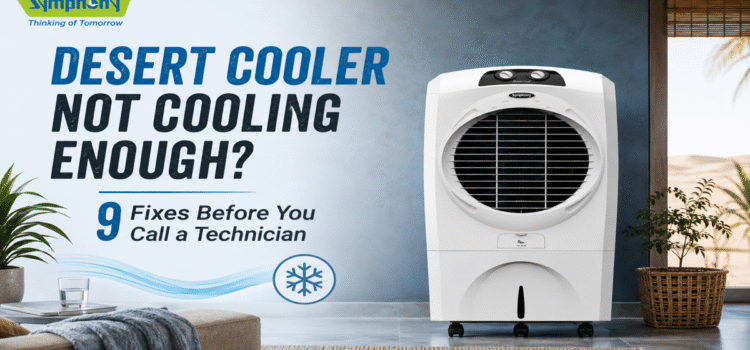
Has your desert cooler abruptly stopped cooling? If yes, before you call a technician for a repair, you need to evaluate its cooling pads, ventilation, pump, water tank, etc.
One of these can be the reason the air feels warm. Even large Symphony models such as the Airforce 60 and Winter 100 XL need wet cooling pads and fresh air moving through the room.
So, before you pay a technician for a service visit, devote a couple of minutes to these checks showcased:
Why Is My Desert Cooler Not Cooling Properly?
You switch on the cooler. The fan starts. Air comes out. Yet five minutes later, the room still feels hot. Annoying, yes. But don’t assume the motor has gone bad.
A desert air cooler has a fairly simple job. It pulls warm air through wet pads and sends cooler air into the room. When water, airflow, or ventilation is disturbed, the cooling drops. Start with the simple stuff.
1. Is There Enough Water?
Look inside the tank or check the water-level indicator. This should be your first check because an air cooler cannot cool properly with dry pads.
If the tank is nearly empty, the fan may continue blowing as usual. The air just won’t feel much cooler.
Add clean water till it reaches the level suggested for your cooler. Never keep pouring water in after the tank is filled. Remember, more water does not always mean more cooling from the equipment.
In case you make effective use of the cooler for several hours daily, get into the habit of evaluating the tank on a regular basis. In case you experience a hot day, water can run out swiftly compared to what you expect.
2. Is the Water Pump On?
This happened in my own home once: the fan was running perfectly, but someone had switched off the pump. The cooler wasn’t broken. It was simply blowing normal air.
Certain models enable you to run the fan without switching on the cooling feature. Take a hard look at the switches or the control panel and ensure that the pump is kept on during usage. Once that is done, wait for some time.
The water needs time to reach the pads and wet them properly. Don’t judge the cooling the moment you press the button. If cooler air starts coming out after a short while, you have found the problem.
3. Are the Cooling Pads Dirty?
Cooling pads don’t stay clean forever. Dust gets trapped in them. The side effects of hard water are white or brown deposits, too. Gradually, the surface becomes clogged, and the water does not spread through it adequately. That hurts cooling.
Before you assess the pads, unplug the cooler. If it has a dusty look, clean them as recommended in the product manual. After how long should I replace the Cooling Pads? There is no magic date. Usage matters. Water quality matters too.
If the pads have become hard, badly damaged, or remain partly dry even after cleaning, replacing them may help. A good habit is to inspect them before the summer season starts instead of waiting for the cooler to perform badly in May or June.
4. Why Are the Pads Still Dry?
A full tank doesn’t help much if water never reaches the pads. Turn the pump on and have a look. Are all the pads getting wet? If not, the water pipe may have a blockage. The pump itself could also be having trouble.
Small dirt deposits in an accessible pipe may be easy to clean, provided your product manual allows it. Don’t start opening electrical sections to investigate further. In case the pumps make no noise, do not move water, or stop repeatedly, it means that calling a technician to fix it is inevitable.
5. Does a Desert Cooler Need an Open Window?
Yes. This one makes a big difference. An air conditioner and an air cooler should not be used in exactly the same way.
With an AC, people usually shut the room. With a desert cooler for home, some ventilation is useful because fresh air needs to enter and moist air needs somewhere to go.
You do not require a strong breeze blowing in the house. A little cross-ventilation is usually enough. If you shut everything tightly, the room can become humid. At that point, sitting in front of the cooler may feel less comfortable even though the machine is running normally.
6. Where Should I Keep My Cooler?
Definitely not squeezed in the middle of the sofa and a wall. A cooler needs to pull in air before it can push cooled air out. In case the back is blocked by boxes, furniture, or a wall nearby, airflow may not happen as you want.
Try moving it near an open window or balcony door. Then check the front. Cool air should have a clear path into the room rather than hitting a cupboard two feet away.
This matters with a large model, a portable desert cooler, or a smaller room desert cooler. Sometimes the easiest fix is simply moving the unit.
7. Can Dust Make a Cooler Less Effective?
Definitely. Look at the grill after a few weeks of summer use, and you will understand why. Dust can settle anywhere air passes. A dirty grill restricts airflow. Dirty pads do the same. Don’t spray water around the motor, wiring, switches, or plug.
This isn’t about making the cooler look neat. Clear air passages help it move more air.
8. Is My Cooler Not Big Enough for the Room?
Possibly. A cooler that feels great in a bedroom may barely make a difference in a large hall.
Think about what the cooler is dealing with. A big room takes longer to cool. Strong afternoon sun adds heat. More people in the room add warmth too. So don’t choose the best desert cooler just by looking at tank capacity. Check the recommended room coverage and airflow.
A prime example of that is the Winter 100 XL by Symphony, which has been designed for larger spaces compared to several compact models. The right unit is contingent upon where you wish to utilize it.
If you plan to buy desert cooler models for a new room, measure the space first. That small step can prevent an expensive mistake.
9. Does Humidity Affect a Desert Cooler?
Yes, and quite a bit. Desert coolers usually feel strongest in hot, dry weather. Nothing may be wrong with the machine. Enhance ventilation and see whether that works for you.
When Should I Call a Technician?
You’ve checked the water. The pads are clean. The pump is on. The cooler has enough fresh air around it. Still no luck?
Now a technician makes sense. Get professional assistance in case the pump is not working, the fan speed keeps getting lower, the motor makes an unusual sound, wires look damaged, or you observe a burning smell.
Also, take water leaking near electrical parts seriously. Don’t open the electrical section yourself just to “have a look.”
Concluding Thoughts
That depends on what’s wrong with it. Changing worn cooling pads or fixing a simple pump problem may be worth the money. But an old cooler that needs a new repair every few months can become expensive to keep.
While opting for a new cooler for home, never shop only by looking at the price. Also consider the room coverage, tank size, cooling-pad type, power usage, cleaning requirements, and airflow.
The same rule applies if you are searching for a desert cooler online. People typing desert cooler online can easily get distracted by discounts and large tank numbers.
Start with your room. A bedroom, living room, shop, and large hall won’t necessarily need the same cooler. And before you replace the existing one, go through these nine checks once.
Keep this in mind: a forgotten pump switch, dusty pads, a closed window, or low water can make a well-oiled cooler feel like it has stopped working.