


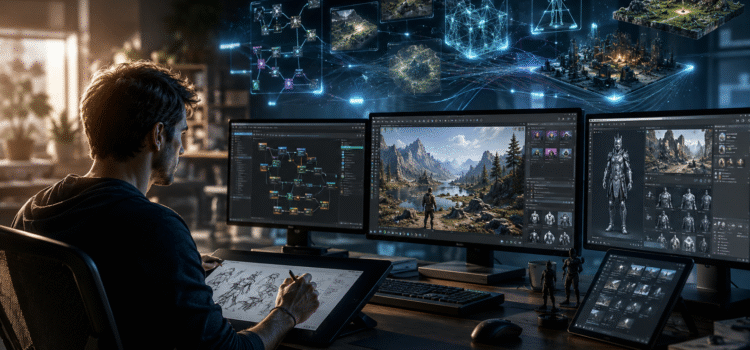
There was a time when “creative work” and “automation” felt like they belonged in opposite categories. Creativity was the human part. Automation was for repetitive, mechanical tasks that didn’t require judgment. That line has blurred considerably, and creative fields, including game development, are one of the clearest examples of how much that shift has changed what’s actually possible for individual creators.
This isn’t a story about machines replacing creativity. It’s a story about what happens when the repetitive, technical parts of creative work get automated, and what that frees people up to actually focus on.
What “Automation” Actually Means in Game Creation
Automation in creative fields doesn’t mean removing humans from the game-generation process. It means removing repetitive, mechanical steps that used to eat up time and require little creative judgment. Rendering out variations of an asset, translating a design idea into working code, generating placeholder content to test a layout, these are the kinds of tasks automation has taken over, not the decisions about what should look or feel a certain way in the first place.
The distinction matters because a lot of skepticism around automation in creative fields comes from a misunderstanding of what’s actually being automated.
Where Automation Has Made the Biggest Difference
Turning Ideas Into Working Prototypes Faster
Traditionally, the gap between having an idea and seeing it work was filled entirely with manual, technical execution. A designer with a strong concept still needed someone, often themselves, to spend weeks translating that concept into a functioning product. Automation has compressed that gap dramatically. Describing what you want and getting a working starting point back has replaced a large chunk of that manual translation work.
Reducing Repetitive Production Tasks
Asset variations, placeholder content, repetitive testing cycles, all of these used to consume disproportionate amounts of time relative to how much creative thinking they actually required. Automating them doesn’t reduce the value of the final creative product. It reduces the time spent on the parts that weren’t where the creative value was coming from anyway.
Making Iteration Cheap Instead of Expensive
Iteration has always been where good creative work actually happens. The problem was that each round of iteration used to cost real time and effort, which discouraged trying more than a few variations before committing to one. Automation lowers that cost significantly, which means creators can genuinely explore more directions before settling on the one that works.
How This Shows Up in Game Development Specifically
Game development sits at an interesting intersection of creative and technical work, which makes it a useful case study for how automation changes creative fields more broadly.
From Blank Editor to Playable Game Prototype
Building a playable prototype used to require enough programming knowledge to implement even the simplest mechanic. Automation has changed that relationship. A social gaming platform lets a creator describe a game concept in plain language and get back a working version, shifting the starting point from a blank code editor to something playable almost immediately.
Faster Feedback on Whether an Idea Works
Games like Eat the World reflect what this kind of process can produce, a tight, well-realized concept that came together through fast iteration rather than a long manual build cycle. That speed matters because knowing whether an idea is actually fun used to require finishing a much larger chunk of development first. Automation shrinks the distance between having an idea and knowing if it works.
Freeing Up Time for the Genuinely Creative Decisions
Every hour saved on manual implementation is an hour a creator can spend on pacing, balance, feel, the parts of a game that genuinely require human judgment and can’t be automated away. Automation doesn’t replace those decisions. It clears space for them.
Why This Doesn’t Diminish the Creative Role
The Judgment Layer Still Requires a Person
Automation can generate a working version of an idea, but it has no opinion on whether that version is actually good. Deciding whether a mechanic feels satisfying, whether a pacing choice works, whether an idea is worth pursuing further, all of that still depends entirely on human judgment. Automation changes how fast you get to that decision point. It doesn’t make the decision for you.
Creative Identity Comes From Choices, Not Execution
Two creators using the exact same automated tools will produce noticeably different results, because the tool only handles execution. The choices about direction, tone, and design still come from the person using it. This is true across creative fields generally: the tool changes how fast an idea becomes tangible, not what makes that idea distinct.
More Iteration Means More Room for Genuine Creativity
Counterintuitively, automation often increases the amount of genuine creative decision-making in a project, not decreases it. When testing an idea costs less, creators can afford to explore more directions, compare more variations, and make more deliberate choices about what actually works, instead of committing early simply because starting over would be too expensive.
Where Automation Still Has Real Limits
Original Creative Vision
Automation can execute a described idea quickly, but it doesn’t generate the underlying vision that makes something worth building in the first place. That spark still has to come from a person with a genuine sense of what they want to make.
Nuanced Judgment Calls
Deciding whether a specific moment feels emotionally right, whether a joke lands, whether a difficulty curve feels fair rather than just numerically balanced, these are judgment calls that resist automation because they depend on taste, not just correctness.
Deep Technical Customization
Highly specific, technically demanding requirements still often need direct, manual work. Automation handles common patterns well. It’s less suited to genuinely novel technical problems that don’t fit existing templates or training data.
What This Shift Means for Creators Going Forward
The practical effect of automation in creative development isn’t that fewer people are needed. It’s that the same amount of people can explore more ideas, iterate more thoroughly, and spend a larger share of their time on the decisions that actually shape a project’s identity. Solo creators and small teams benefit disproportionately here, since they previously had the least slack in their schedules to explore multiple directions before committing.
This also changes what skills matter most. Technical execution ability is becoming less of a bottleneck, while design judgment, taste, and the ability to iterate based on real feedback are becoming more valuable relative to raw implementation skill.
Final Thoughts
Automation hasn’t replaced creativity in game development or in creative fields more broadly. It has replaced the repetitive, technical steps that used to stand between an idea and a version of it people could actually experience. What’s left for the human is arguably the more interesting part: deciding what’s worth building, refining it based on how it actually feels, and knowing when it’s genuinely good rather than just finished.
The tools will keep getting faster at execution. The judgment about what to build, and whether it’s actually working, stays firmly a human responsibility, and that’s likely to remain true no matter how much further this shift goes.